One of the primary applications of induction hardening machines is in the automotive industry, where the process is used to enhance the durability and wear resistance of critical components. Parts such as crankshafts, camshafts, axles, gears, and drive shafts are commonly hardened using induction technology. These components experience significant stress during operation, and induction hardening provides the necessary surface hardness to extend their lifespan while maintaining a tough and resilient core.
By hardening specific areas, induction machines allow automotive manufacturers to target only the sections of the part that experience the most wear, reducing material costs and improving overall performance. This is especially important in high-performance vehicles where durability and weight reduction are critical.
In the aerospace industry, the use of induction hardening machines helps improve the strength and reliability of high-precision components. Turbine blades, landing gear components, and structural parts are often subjected to induction hardening to enhance their resistance to fatigue and wear. This process ensures that aerospace components can withstand extreme conditions, including temperature variations, high mechanical loads, and abrasive forces.
Aerospace manufacturers rely on induction hardening to meet the rigorous safety and performance standards required in aviation. The precision of induction hardening also allows for better control over the depth of hardening, ensuring optimal balance between hardness and flexibility for flight-critical parts.
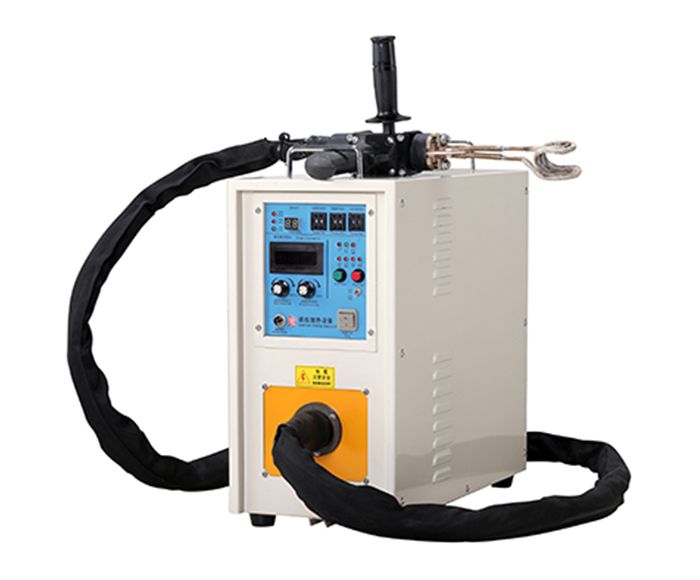
Induction hardening machines are widely used in tool and die manufacturing to harden surfaces of cutting tools, dies, and molds. These tools must withstand extreme wear and abrasion during their operation, and induction hardening helps to ensure their longevity and performance. The process provides a hard, wear-resistant surface while maintaining the toughness necessary to prevent brittle fractures.
Suggested reading:Tool manufacturers often use induction hardening on high-value tools to extend their service life and reduce the need for frequent replacement. This reduces operational costs for industries that rely heavily on precision machining, stamping, and forming operations.
Induction hardening is also critical in the production of components used in heavy equipment and construction machinery. Parts such as shafts, gears, and bearing races used in excavators, loaders, bulldozers, and cranes are often hardened using induction machines to improve their resistance to wear, fatigue, and heavy loads. This ensures that these machines can operate efficiently in harsh environments, handling large workloads and tough conditions.
By hardening key components, induction hardening machines help construction and heavy machinery manufacturers produce more durable equipment that can perform reliably in demanding environments, reducing the risk of mechanical failure.
In the oil and gas industry, induction hardening is used to enhance the wear resistance and fatigue strength of drilling components and downhole tools. Parts such as drill bits, couplings, and pump shafts undergo hardening to increase their operational life and withstand the extreme conditions encountered during oil extraction. This includes high pressures, temperatures, and abrasive environments, making induction hardening a vital process for improving performance and safety in this sector.
The induction hardening process helps oil and gas companies reduce equipment downtime by ensuring that critical components can endure harsh conditions over extended periods, improving overall efficiency in energy extraction and processing.
Induction hardening machines play a vital role in various industries, from automotive and aerospace to heavy machinery and oil and gas. Their ability to precisely control the hardening process allows manufacturers to enhance the durability, performance, and safety of critical components, reducing operational costs and extending the lifespan of parts. By focusing on targeted hardening areas, these machines contribute to efficient and reliable manufacturing processes across multiple sectors.
Suggested reading:



Comments
0Related Articles
By Marina
173
0
0
By Franke
200
0
0
By Mirabella
168
0
0
By Evelyn y
182
0
0